
????The holiday season, with its twinkling lights and festive cheer, often comes with a hidden layer of stress and emotional complexity. For many, it’s a time that can amplify existing pressures, trigger difficult feelings, and truly test our ability to maintain healthy boundaries. This post is designed to help you proactively prepare for and navigate these challenges, ensuring you prioritize your peace and self-care amidst the holiday hustle. ✨

????Understanding Emotional Triggers: The “Willful Ignorance” Factor ????
????♀️During the holidays, you might encounter situations where loved ones seem to deliberately overlook your feelings, needs, or boundaries. This isn’t always a lack of understanding; sometimes, it’s an active choice to remain uninformed, often to protect their own beliefs or comfort. This dynamic, which we can call “willful ignorance” in relationships, can be incredibly frustrating and emotionally draining. Recognizing this pattern can help you depersonalize the experience and protect your energy. “What we don’t transform, we transmit.” — Richard Rohr

Your Mental Health Matters: Self-Protection is Not Selfish! ????
It’s absolutely crucial to understand that protecting your mental and emotional well-being, especially during emotionally charged times like the holidays, is not selfish. It’s an act of profound courage and self-love. When you choose to limit your exposure to situations or individuals that consistently cause you distress, you are taking a vital step in caring for yourself. This can be particularly challenging with family, where deep-seated patterns and expectations can make setting boundaries feel like a betrayal. Remember, your peace is a priority. ????

The Courage of Closure: Navigating Difficult Relationships During the Holidays ????️: This section offers a framework for understanding and processing the emotions that arise when you need to limit or create distance in difficult relationships to protect your mental health during the holidays.

The Core Message: Self-Protection is Not Selfish (Acknowledge the Pain) ????
- The Act of Limiting: Frame the decision to create distance or limit interaction as an act of courage and self-love, not failure or surrender. Emphasize that protecting your mental health is a primary need.
- Normalizing Guilt: Understand that guilt is common and often stems from empathy, old programming, or the grief for the relationship you wished you had. The presence of guilt doesn’t mean you made a mistake.
- Anger & Betrayal: Validate anger as a justified response to feeling violated. Explain that betrayal is painful because it shatters trust, and this energy needs to be processed, not suppressed.
- The Central Thesis: “The choice to protect your peace is an act of self-love, not selfishness.”

????️ Practical Guidelines for Processing Difficult Emotions (Your Holiday “How-To”): Before, during, or after holiday gatherings, these steps can help you navigate the guilt, anger, and betrayal you may inevitably feel.

Overcoming Guilt & Releasing Responsibility ⚖️
- Validate Your ‘Why’: Before the holidays begin, take time to write down the concrete reasons for needing to limit a relationship or set boundaries. This “Why List” serves as a powerful anchor to reality when self-doubt (guilt) surfaces, reminding you of the valid reasons for your choices.
- Draw the Line of Responsibility: Understand this crucial distinction: You are responsible for your choices and boundaries; you are not responsible for the other person’s feelings or reactions to your choice. You cannot control their response, only your own actions.
- Practice Self-Compassion: Treat yourself with the same kindness, understanding, and affirmation you would offer a highly valued friend. You are navigating a difficult situation, and you deserve your own support. ????

????Your deep frustration with willful ignorance stems from a strong commitment to logic, truth, and effort. This is a valuable quality, but it can be exhausting if you don’t manage it. Validate your own core values:
Recognize that your intolerance of deliberate incomprehension is simply your integrity kicking in. It confirms that you prioritize three critical things:
- Truth and Logic: You value a world based on evidence and reason. Willful ignorance feels like an insult to intelligence.
- Responsibility: You believe people have a moral duty to be informed, especially when their beliefs impact others.
- Effort: You recognize and respect the work required to genuinely understand complex topics, and you’re frustrated when others bypass that effort.

????Distinguish Between Ignorance and Willful Ignorance
To avoid constant irritation, make a clear distinction:
- Genuine Ignorance (Curable): This is a simple lack of knowledge. It’s an opportunity for education or discussion. This person is not your enemy.
- Willful Ignorance (Frustrating): This is the deliberate rejection of readily available facts or evidence, often to protect an existing belief or identity. This is the true source of your stress.

????️Shift Your Focus from Correction to Conservation
You cannot force someone to value truth. Instead of exhausting yourself trying to correct those who are willfully ignorant, use your energy more constructively:
- Set Boundaries: Recognize when a conversation has reached the point of deliberate rejection, and give yourself permission to disengage. You don’t have to win every argument.
- Invest in the Curious: Focus your time and energy on engaging with people who are genuinely seeking knowledge and are open to evidence. Feed your curiosity, not your frustration.
- Channel the Impulse: Use your drive for truth to master an area of knowledge or mentor others who are open to learning. Let your high standards fuel your own growth.
???? Ultimately, your desire for reason and clarity is a positive force. Give yourself permission to protect that energy and direct it toward positive outcomes, not constant battles against intellectual stagnation.

Working Through Anger and Betrayal ????
- Acknowledge and Name: Give voice to your emotions. Explicitly name what you are feeling (“I feel betrayed,” “I feel furious”) to reduce the feeling’s control over you.
- Constructive Release: Find safe, physical outlets for anger. This could include intense exercise, yelling into a pillow, or writing an unsent letter to express your feelings without engaging in harmful confrontation. The goal is to move the energy out of your body. ????♀️
- Reclaim Self-Trust: Focus on rebuilding faith in your own judgment. Start by keeping small, intentional promises to yourself. Remember, the betrayal was about their character, not your worth. You are worthy of trust and respect.

Setting Boundaries: Alternative Approaches to Consider for the Holidays ????
The decision to limit or end communication is deeply personal, and there’s no single “right” way. Before a complete cut-off, some people explore options along a spectrum of contact. Consider what feels right for you this holiday season:
| Level of Contact | Description | Goal |
| Complete No Contact | Zero communication (no calls, texts, or social media interaction). ???? | Maximum protection; used when the situation is highly volatile or damaging to your well-being. |
| Low Contact | Communication is limited to essential information only (e.g., necessary logistics for holiday events). You do not engage in deep conversations or emotional topics. ???? | Minimizing exposure while maintaining a basic link, if necessary. |
| “Gray Rock” Method | When you must interact, you become as uninteresting and unresponsive as a gray rock. Give short, boring, non-emotional answers. This minimizes drama by not giving the toxic person or situation any emotional “fuel.” ???? | Minimizing drama by not giving the toxic person or situation any emotional “fuel.” |
| Communication with Conditions | Clearly state what must happen for you to communicate (e.g., “I will only attend gatherings if [the toxic person] is not present,” or “I will hang up if you bring up that subject”). ????️ | Setting firm rules for engagement and making the consequences clear, putting you in control. |
???? Key Takeaway: The choice to maintain or end a relationship is yours alone. When a relationship (even a familial one) consistently involves untruths, disrespect and toxicity, prioritizing your peace is a healthy and reasonable response.

Honesty Sign by Jimmy John’s
Practical Tools for Emotional Regulation (Immediate Holiday Help) ????

For those moments when emotions spike during holiday gatherings or preparations, these accessible tools can offer immediate relief:
| Tool Category | Specific Technique Summary | Audience Application |
| Grounding | 5-4-3-2-1 Technique: Use all five senses to interrupt rumination and pull focus back to the present moment. (Name 5 things you see, 4 things you feel, 3 things you hear, 2 things you smell, 1 thing you taste.) ????️ | Use this when feeling overwhelmed, panicked, or lost in painful memories. |
| Physical Reset | Temperature Shock: Holding ice or splashing cold water on your face to give the nervous system a harmless “shock” reset when anger is high. ???? | Use this when the anger feels physically hot or out of control. |
| Breathwork | Diaphragmatic Breathing: Focus on long, slow exhales (longer than the inhale) to stimulate the Vagus nerve and calm the flight-or-fight response. ????️ | Use this daily or when trying to settle down before sleep or before an event. |
| Acceptance | “Hello, Anger” Meditation: Acknowledge the feeling without judgment, visualizing it as a shape or color, and breathing into the physical sensation to allow it to pass naturally. ????♀️ | Use this to prevent resentment and process pain without fueling the emotion. |

Creating Internal Closure for a Peaceful New Year ????: Focus on creating internal closure, which is the most powerful and lasting kind.

- External Closure is Rare: Stress that you must accept you may never receive an apology or external validation. True closure is an internal decision. You hold the power here.
- Accept Reality: Encourage accepting the painful truth: The person they showed you is the real person. Stop fighting for the idealized version you wish they were.
- Redirection of Energy: The final, powerful step is the conscious choice to stop spending mental energy on those who can’t or won’t appreciate it and redirect that energy toward your future, your goals, and your healing. This is your gift to yourself. ????
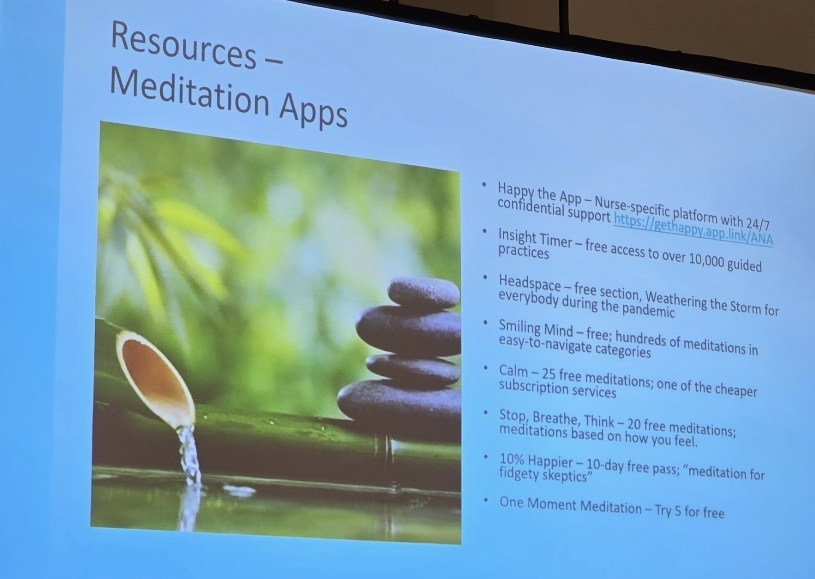
Thank you to Jennifer M Ahlquist, DNP, APRN, ANP-BC, FNP-BC; Andrea N. Kwasky, DNP, PMHNP-BC, PMHCNS-BC, and Mary Serowoky, DNP, APRN-BC, FNP for their inspiration session at the 2025 APNA Conference, “Self-Compassion in Practice: Practical Strategies to Translate Self-Care to Patient Care”.

#PeacefulHolidays, #HolidayMentalHealth, #family, #copingskills, #HolidaySurvivalGuide, #strongtribessavelives, #PMHCon, #conference, #continuingeducation, #SelfCareHolidays, #BoundarySetting, #mentalhealthishealth, #EmotionalWellness, #HolidayStressRelief, #MentalHealthMatters, #FamilyBoundaries, #WillfulIgnorance, #ProtectYourPeace, #Mindfulness, #SelfCompassion, #DifficultRelationships, #EmotionalRegulation, #HolidayPrep, #InnerPeace, #NewYearNewYou, #CopingSkills, #HealthyBoundaries,